Showing posts with label African Folklore. Show all posts

Thursday, 6 June 2019

What animal am I? -> Hippo


Week 7 of our “What animal am I?” series .…

Clue 1: I am adorably pudgy -> the adoringly pudgy hippos are one of the most aggressive animals on Earth and kill about 500 people in Africa each year.
 
Clue 2: I am related to whales & dolphins! -> Until 1909, hippos were grouped with pigs and other hoofed animals, based on molar (tooth) patterns and their physical resemblance. However modern research with blood proteins, DNA and the fossil records show that the closest living relatives of the Hippos are aquatic mammals like whales, dolphins etc. 

Clue 3: Usain Bolt might outrun me, how about you? -> A hippo can run 30-40km/h on land & “swim” 8km/h … Usain Bolt’s set the  record of 44.72km/h during the 100 meters sprint at the World Championships in Berlin on 16 August 2009. Bolt's average speed over the course of this race was 37.58 km/h… me thinks the hippo might win in a race against me!
  

Evolution: Translated from the ancient Greek it means "river horse”. After the elephant the hippo is the 2nd largest type of land mammal (only rivaled by some large rhinos). The hippopotamus is a large, mostly herbivorous, semiaquatic mammal native to sub-Saharan Africa. There are only two species of hippos left: the common hippo and the much smaller pygmy hippo. 

Until 1909, hippos were grouped with pigs and other hoofed animals, based on molar (tooth) patterns and their physical resemblance. However modern research with blood proteins, DNA and the fossil records show that the closest living relatives of the Hippos are aquatic mammals like whales, dolphins etc. from which they diverged about 55 million years ago.


HiPPOPOTAMUS:
Lifespan: up to 40 years (up to 50years in captivity)
Speed: 30 km/h (on land running), “swim” 8 km/h.
Scientific name: Hippopotamus amphibius
Mass: 1300kg – 1500kg (female) to 1500kg to 1800kg (male), exceptional large males have been reported to weigh up to 3200kg
Height: 1.5m at shoulder
Body length: 3.3m – 5.2m long


-potami or -potamuses ;) More than one hippopotamus are called hippopotami, and 'hippopotamuses', or 'hippos' is also used. ... A male hippo is known as a bull. A female hippo is called a cow, and a baby hippo is called a calf.  A group is called a pod, herd, dale, or bloat.


Appearances: Females and young males are almost indistinguishable and very hard to identify. Common hippos are recognisable by large size barrel-shaped torsos (body), wide-opening mouths revealing large canine tusks, nearly hairless bodies and short columnar legs. They are incapable of jumping but do climb up steep banks.

The eyes, ears, and nostrils of hippos are placed high on the roof of their skulls. This allows them to breath and see while the rest of the body is submerged. They can hold their breath for up to six minutes underwater. When completely submerged, their ears and nostrils fold shut to keep water out.

The jaw hinge is located far back enough to allow the animal to open its mouth at almost 180°. The bite force of an adult has been measured as 8,100 newtons (similar to bench-press 825kg in weights!) and can easily snap a canoe in half with their powerful jaws, Hippos teeth sharpen themselves as they grind together. The incisors can reach 40 cm, while the canines reach up to 50 cm and are only used for combat.

Sunscreen: The hippo has very little hair, but a 6cm think layer of skin which provides great protection. The animals' upper parts are purplish-grey to blue-black, while the under parts and areas around the eyes and ears can be brownish-pink.
Their skin secretes a natural sunscreen substance which is red-coloured. The secretion is sometimes referred to as "blood sweat” but is neither blood nor sweat. This secretion is initially colourless and turns red-orange within minutes, eventually becoming brown.
Nevertheless, this natural sunscreen cannot prevent the animal's skin from cracking if it stays out of water too long.

Biggest killers in Africa: Humans, Mosquitos, Tsetse Fly, Black mamba, Buffalo, & Hippo — the adoringly pudgy hippos are one of the most aggressive animals on Earth and kill about 500 people in Africa each year.

Semiaquatic: Different from all other large land mammals, hippos are of semiaquatic habits, spending the day in lakes and rivers. Proper habitat requires enough water to submerge in and grass nearby. Despite being semiaquatic and having webbed feet, an adult hippo is not a particularly good swimmer nor can it float. It is rarely found in deep water; when it is, they sink to the bottom and move by pushing off the bottom in leaps.

Hippos leave the water at dusk and travel up to 10km inland to graze on short grasses, their main source of food. They spend four to five hours grazing and can consume 36kg of grass each night.
The hippo has a complex three-chambered stomach but does not "chew cud". They can store two days' worth of grass in their stomachs and can go up to three weeks without eating. Hippos are born with sterile intestines, and require bacteria obtained from their mothers' faeces to digest vegetation.

Speed: Though they are stocky animals, hippos can gallop at 30-40 km/h on land but normally trot; and can move at speeds up to 8 km/h in water, typically resurfacing to breathe every three to five minutes. Usain Bolt’s set the  record of 44.72km/h during the 100 meters sprint at the World Championships in Berlin on 16 August 2009. Bolt's average speed over the course of this race was 37.58 km/h

Habitat: Hippos inhabit rivers, lakes and mangrove swamps, where territorial bulls preside over a stretch of river and groups of five to thirty females and young. They emerge at dusk to graze and use the same paths on land which, over prolonged periods, can divert the paths of swamps and channels.
Grazing is a solitary activity and hippos are not territorial on land except if you get between IT and the water.

Territorial: The territories of hippos exist to establish mating rights and dominant males are very protective over their group. To warn off rival males, they open their huge mouths and display their long, curved canines! They also make loud grunts and aggressive splashes in the water.
“Yawning" serves as a threat display. When fighting, male hippos use their incisors to block each other's attacks and their large canines to inflict injuries. 
Hippos mark their territory by defecation. While depositing the faeces, hippos spin their tails to distribute their excrement over a greater area. 

Communication: Hippos appear to communicate vocally, through grunts and bellows, and they may practice echolocation. Hippos have the unique ability to hold their heads partially above the water and send out a cry that travels through both water and air; individuals respond above and under water. Hippos will also express threat and alarm with exhalations.

Cleaning stations: As with fish and turtles on a coral reef, hippos occasionally visit cleaning stations. By opening their month wide, they signal readiness for being cleaned of parasites by certain species of fishes.


STORIES: Hippopotamuses have been the subjects of various African folktales. According to a San story; when the Creator assigned each animal its place in nature, the hippos wanted to live in the water, but were refused out of fear that they might eat all the fish. After begging and pleading, the hippos were finally allowed to live in the water on the conditions that they would eat grass instead of fish and would fling their dung so that it can be inspected for fish bones.

In a Ndebele tale, the hippo originally had long, beautiful hair, but was set on fire by a jealous hare and had to jump into a nearby pool. The hippo lost most of his hair and was too embarrassed to leave the water.

Thursday, 1 September 2016

African Folklore Collection: Volume 2

Since July was inspired by superheroes and superheroics (in honour of Comic Con), we at Epic recalled some folklore tales from our continent that we felt fit the theme. The animals in these stories are totally worthy of being called heroes - read about their feats below!

How Eagle Saved Monkey from Hyena


A Ghanaian folktale tells the story of a Hyena who fell into a trap in the ground and could not get out. He cried for help, but he had such a bad reputation for being treacherous that all the passers-by refused. Until, finally, kindly Monkey heard his cries and lent a helping hand, despite his instincts. And, true to everybody's suspicions, Hyena attacked Monkey!
Eagle flew overhead and spotted the struggle. He swooped down and pulled Monkey away from Hyena, then demanded to know what was going on. Monkey explained what Hyena did. Eagle wanted to see exactly what had happened and asked Hyena to recreate the scenario. Hyena obliged, and got climbed back in the trap, realizing too late that Eagle had tricked him to save Monkey!

How Zebra Got His Stripes


A Bushman folktale tells the story of how the zebra got his stripes - by saving the animals' only water supply from the villianous baboon! 
The baboon had claimed the watering hole for himself, and to chase the thirsty animals away, he lit a big fire next to the water. 
One day, the zebra, his coat gleaming a pure white in the burning sun, approached the water, wanting a drink. The baboon, angry, shooed him away, but the zebra rightfully said that the water belonged to everyone. And so, they fought for it, and the battle raged, until the zebra kicked the baboon so hard that the baboon went flying - and the zebra lost his balance and fell into the scorching flames of the baboon's fire! The burning sticks and logs seared black stripes into his fur, and to this day, the zebra wears these markings as a badge of honour.

How the Hare Saved the Animals


There's a story of a hare that saved all the animals from becoming the lion's dinner. The lion had requested that each day, an animal must be brought to him to eat, or he'd hunt them all down. The animals had obliged, each one living in fear that their turn to be dinner would be next. One day, it was the hare's turn, but instead of shaking in fear, he smiled knowingly, and just before presenting himself, he rolled in the dirt, covering himself in mud. The lion turned his nose up at the unappetizing creature,, and the hare told him that he was supposed to deliver a big juicy hare, but another lion stole it from him! And, just as the hare suspected, the lion wanted to jealously fight this other lion, so hare led him to a well, pointed at lion's reflection and told him that was his foe. The lion jumped in head-first, and never resurfaced.

Follow us on social media and look out for the #FolkloreThursday hashtag! We're on Facebook, Twitter and Instagram!

Monday, 1 August 2016

African Folklore Collection: Volume 1

Every Thursday, Epic likes to discover and share ancient African tales: of animals, magical beings and fantastic happenings.
The lush, diverse African continent is full of these tales and they deserve to be preserved - so we've collected all of the ones we've posted onto our social media channels so far, with more to follow.

Here's the first volume, first posted in June 2016:

The Elephant's Trunk


The elephant used to have a small snout, which he liked, but it made feeding uncomfortable as he'd often have to use his knees. One day, while drinking water at the river, he caught the attention of a crocodile, who decided that the elephant looked very tasty. He sneaked towards the elephant beneath the water, lunged forward and grabbed the elephant's snout. Luckily, the elephant was too strong for the crocodile to pull him beneath the water, and he stood his ground. The crocodile was relentless and only after an hours-long tug of war did he give up - leaving the poor elephant with a stretched-out nose.

The Ostrich and the Jealous Lions


There's an old Bushmen tale of some proud male lions who were jealous of the ostriches, for all the lionesses admired the ostriches' voice. The lions were belittled by their women, who said they spoke as if they had their tails in their mouths.
The lions thus conspired to tear at the ostriches' chests and rip out their lungs, in the hopes that eating the lungs would grant them a voice as deep and as full as the lionesses liked. 
Today, the lions all love to show off their famous roars.

Mermaids of the Karoo


Rumours and legends about mermaids and merfolk have been swirling around Southern Africa for millennia. In the Klein Karoo, the home of the ancient Khoisan people, are rock paintings of mermaids - perhaps strange for a rather dry part of South Africa, until you remember that 250 million years ago, the Klein Karoo used to be an ocean! Still, more recently, are local claims of mermaids combing their hair by little rock pools.

You can find more stories by exploring the African Folklore tag, and you can stay up to date by following us on Twitter, Instagram and Facebook - look out for the #FolkloreThursday hashtag!

Tuesday, 28 June 2016

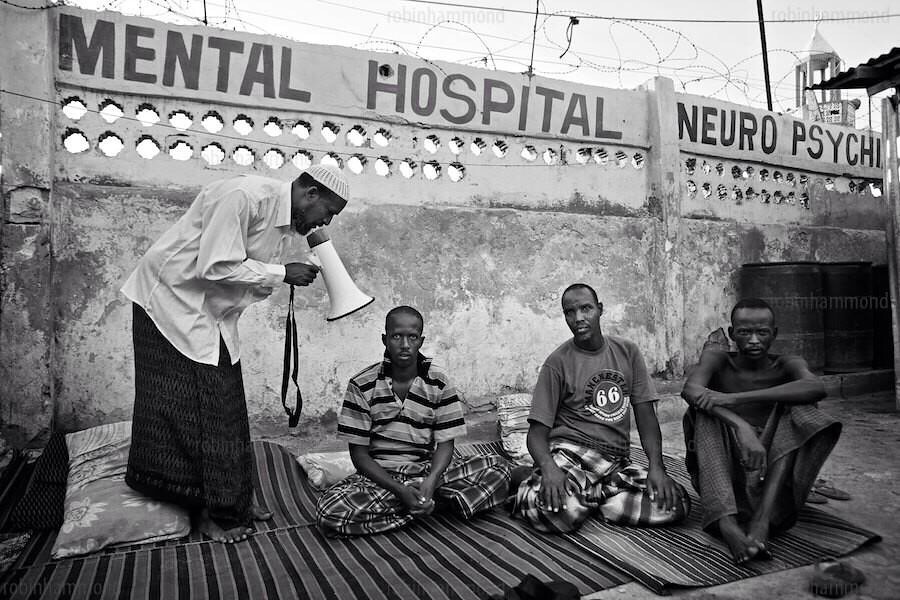
Disability in Africa: Superstition and Tradition

disability in africa

What do you think of when you hear the words “disability” and “Africa”? Perhaps an image of poverty-stricken children with polio comes to mind, or maybe you’ll picture charities like Doctors Without Borders working tirelessly to better the sickly.


While there is still a lot of work to be done in furthering disability rights and dismantling ableism throughout Africa, the continent is so vast, so full of history and so rich with culture that, for centuries, there has been plenty of time devoted to considering special needs. People with all kinds of disabilities have been the subject of folkloric tales, spiritual icons, sources of wisdom and symbols of togetherness and respect.


There is a more wholesome, holistic and spiritual view of disability in most traditional communities: there is less focus on “fixing” or “rehabilitating” various physical and mental limitations, but rather an acceptance of people’s different needs, particularly in Sub-Saharan Africa. While it is important to note that some tribes and societies are guilty of ableism (and modern societies are not much better), acceptance, inclusion and reverence of the differently-abled is quite common.


Flickr | Robert Hammond
In contrast to western concepts, disability is not usually seen as one conglomerate: for instance, in Tanzania, the term “ulemavu” has only recently been used for disability in general. Throughout history, different disabilities have been considered separately from one another: deafness and paraplegia would not be seen as related issues. Although, more similarly to western definitions, some indigenous societies define disability as “a limitation in social role functions resulting from physical, sensory or emotional abnormalities and is of a spiritual nature” (Interestingly, emotional issues have yet to be fully accepted by mainstream society as disabilities).


It’s widely considered rude to laugh at somebody’s disability. A Songye proverb says “Tosepanga lemene, Efile kiakupanga” — “Don’t laugh at the disabled person, God keeps on creating you”. It’s commonly thought that mocking disability would cause one to suffer disability, whether by a future accident or by bearing a disabled child.


Disability is also associated with great power. A person with one eye is said to see better than a two-eyed person. The Ga from the Accra region in Ghana believe that people with mental disabilities are reincarnations of deities, and are treated with kindness and patience. In Sub-Saharan Africa, any irregular birth — from breech birth to birth defects — is treated especially ritualistically. In Benin, children who were born with anomalies were believed to be protected by supernatural forces and brought good luck. The Kurkana of Kenya see such as children as gifts from God, and must be taken care of as well as possible, in fear of God’s wrath. In Tanzania, the Chagga people believed that people with disabilities protected the community from evil spirits by serving as a pacifier: the presence of a person with a disability satisfied the needs of the evil spirits, and in doing so was treated with respect for keeping the whole community safe.  


It’s important to remember that, in many African countries, community is extremely important: family is seen as the most important social unit, not the individual. While this has been used against the differently-abled (in the sense that performing physical tasks to better the community is prized), this is also used as motivation to treat everybody with respect. A Shona proverb from Zimbabwe states “Benzi hunge riri rajo, kudzena kwaro unopurudza” — if someone with a mental disorder is a member of your family, you applaud his dancing.


The agency of a person with a disability isn’t taken away in many tribes. The Maasai of Kenya accept women with disabilities bearing children, and she is allowed to stay in her family home as “the girl of the homestead” instead of moving in with her husband’s family, which is a privilege in Maasai culture. In the same tribe, children with disabilities are treated the same as able-bodied children, participating in the same rituals. The Hausa people of northern Nigeria and southeastern Niger have disabled communities, represented by a leader with the same disability (this social structure goes for every community and profession in Hausaland).

Indeed, many African countries don’t see people with disabilities as being fundamentally different; a person with a specific impairment is seen as just that. The disability does not define who they are, and their contributions to their communities are valued as much as anybody else’s. According to many an East-African proverb, every person has been placed on the earth for a reason.


Sources:
http://www.rds.hawaii.edu/ojs/index.php/journal/article/viewFile/110/367
http://dsq-sds.org/article/view/3197/3068
Encyclopedia of Disability - Volume 5
Hausa Superstitions and Customs